
Manuel Kilian

I write, advise and build at the intersection of government and technology.

Portrait of Manuel Kilian

About

For the past decade, I have worked where government and technology meet.

Until mid-2026, I built the Global Government Technology Centre Berlin from the ground up, a first-of-its-kind joint effort between the German Government and the World Economic Forum.

Before that, I founded, scaled and sold GovMind, one of Europe's leading GovTech procurement intelligence platforms, through to its acquisition in 2024. Around the same time, I advised Hypoport on the restructuring of its insurance business.

I came to know the inner workings of politics as Chief of Staff to the President of BDI, the Federation of German Industries, and during a short stint at the UK Cabinet Office. I also had my fair share of building slides for the strategy consultancy hy, then owned by the publisher Axel Springer, working mostly on corporate venture capital.

I hold an MPhil in Public Policy from the University of Cambridge, but most of what I know, I learned by building things.

Right now, I advise Germany's Federal Ministry for Digital Transformation and Government Modernisation on international cooperation, and I work with governments elsewhere, including the UAE Prime Minister's Office, on how to adopt agentic AI at scale.

Together with a small team of great individuals, I am building the initiative The Agentic State.

Ways to work together

I am always open to new collaborations, and there are a few ways to bring me in, depending on what is needed.

Speaking

I regularly speak about topics I care for. These are, amongst others:

Digital Statecraft: Conceiving digital transformation as a discipline of nation-building in its own right, and revealing the underlying forces that explain why some governments leap ahead while others stall, regardless of wealth or technical talent.

The Agentic State: Rethinking government for the era of agentic AI, and what it does to our understanding of state capacity and modern bureaucracy if we can move from "doing things right" to "doing the right things" with the help of AI agents.

Technological Sovereignty: Cutting through the buzzwords to understand the "right to play" and the "need to play" of differently capable governments in a world where technological progress moves at an unmatched pace.

I have covered these topics at international conferences such as the World Governments Summit in Dubai and the WEF Annual Meeting in Davos, as well as at GovTech expert gatherings — like GovInsider's Festival of Ideas in Singapore or Govtech 4 Impact World Congress in Madrid — and of course closed-door roundtables and the like.

If you are shaping a programme, panel or roundtable where one of these fits, get in touch.

Get in touch

Writing

I write about the same themes I speak on, and I am open to where it can lead, whether short essays and commentary or longer pieces and collaborations.

Get in touch

Advisory work

I work directly with governments, on topics ranging from the hands-on implementation of agentic AI to the wider international dimension of digital transformation. My current roles include engagements with Germany's Federal Ministry for Digital Transformation and Government Modernisation and the UAE Prime Minister's Office.

I have also advised technology companies in the past, where the work had a clear angle to government and public-sector engagement.

Get in touch

Selected work

On LinkedIn I share new pieces, talks and what I am working on, so follow along there.

Here is a selection of the larger work behind it:

Snippet from a WEF event in Geneva in April 2026, with the full session recording here.

Thinking in government workflows to make agentic AI work

Once a year at the Global Government Technology Centre, we published the Global State of GovTech report. I led this project on the GGTC side, alongside teams from the World Economic Forum and Capgemini.

While the 2025 edition examined the global public impact of GovTech, the 2026 edition (with an interactive version) started with one question: how should governments understand the way they operate if agentic AI is to move beyond pilots?

The answer comes down to workflows. The workflow is the unit of action for agentic AI, yet governments rarely view themselves this way, defaulting instead to org charts, ministry boundaries and political responsibilities.

To address that, we mapped the entire public sector into 70 central workflows — so-called government functions. It sounds simple, but it had not been done before, and building that taxonomy was a year-long effort.

That taxonomy became the foundation for our entire analysis: systematically assessing where agentic AI offers the highest impact and building a clear map of opportunity.
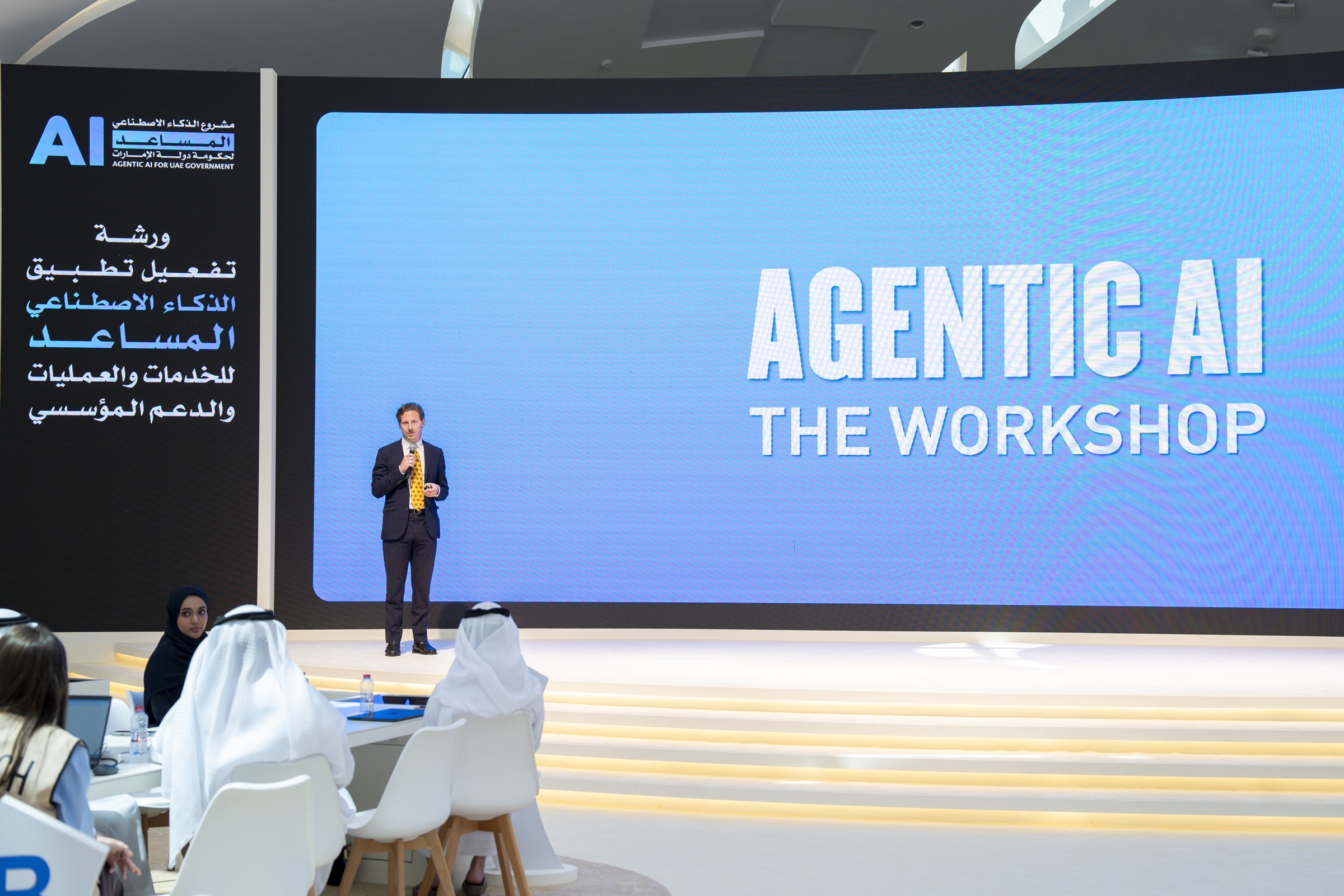
Manuel Kilian presenting on stage at the Agentic AI workshop for the UAE Government in Dubai, with a screen reading 'Agentic AI: The Workshop' behind him

Agentic AI in the UAE Government

In April 2026, the Prime Minister of the UAE announced that within two years, 50 percent of government services and operations will run on agentic AI. No government has committed to anything on that scale, and in my opinion this is one of the most interesting missions in modern-day bureaucracy.

I have had the chance to accompany a small part of this effort. We co-developed a workshop that brought together the country's senior political leadership and more than 300 participants from 50 federal entities in Dubai in June 2026 to select, design and commit to the first services to be rebuilt around AI agents.

I have stayed close to the work since, and continue to contribute where I can.

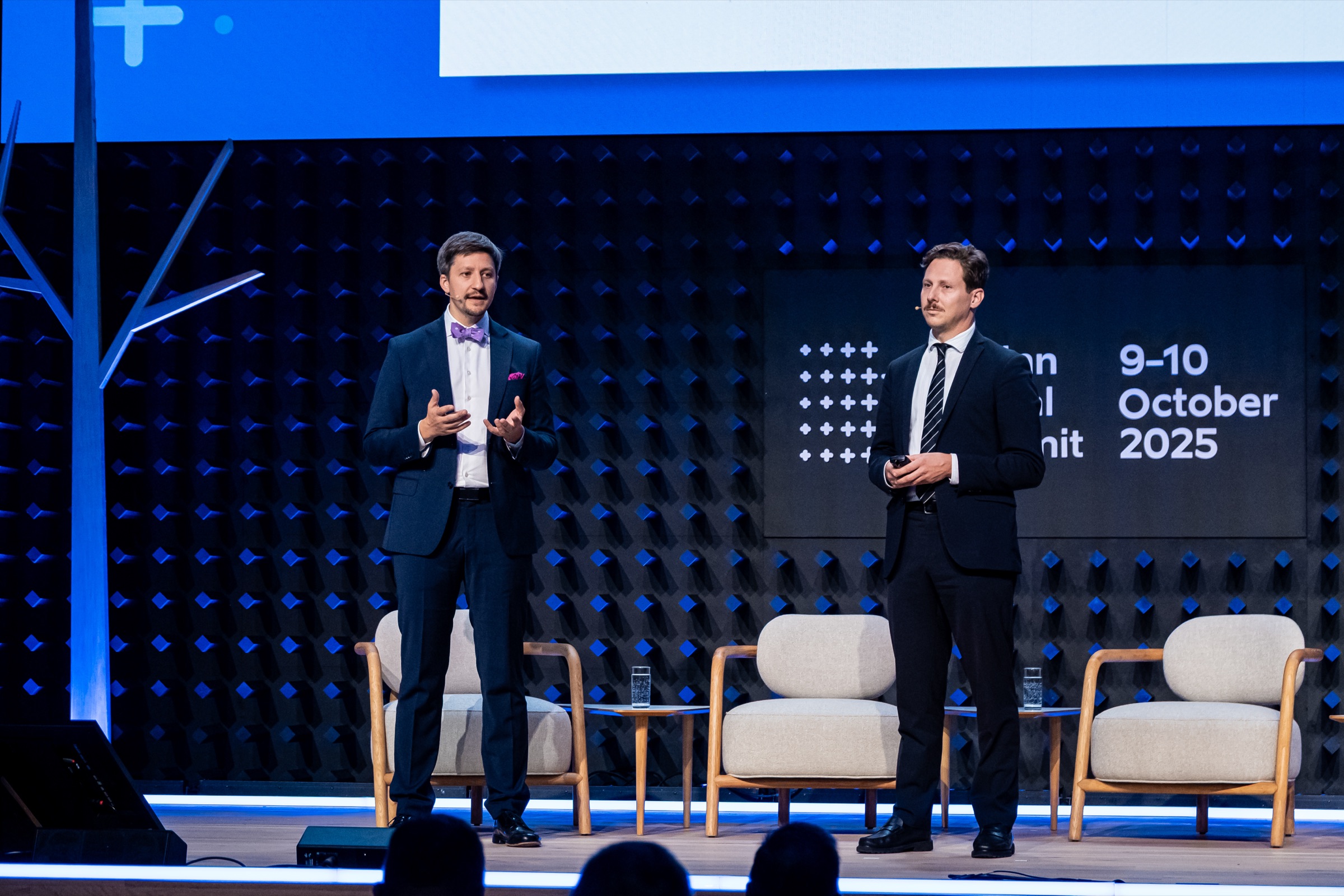
Manuel Kilian and co-author Luukas Ilves on stage at the Tallinn Digital Summit, October 2025

The Agentic State Initiative

This work began with the publication of The Agentic State vision paper, which I co-authored, presented at the Tallinn Digital Summit in October 2025 (pictured on the left, with co-author Luukas Ilves) and shaped by over 20 digital government leaders across 15 countries.

The paper outlines an architecture for deploying agentic AI across key public sector operations: service design, internal workflows, policy-making, compliance, crisis response and procurement. It also details the necessary foundations, from agent governance and data protection to technical infrastructure and cybersecurity.

We saw strong global interest in this work, and a clear demand to make the framework actionable, which led us to grow what began as a paper into a longer-term initiative.